How much low EMF exposure should a buyer accept in an infrared sauna?
Low EMF is the most repeated phrase in infrared sauna marketing and the least defined. Here is what the numbers mean and how to get honest ones.
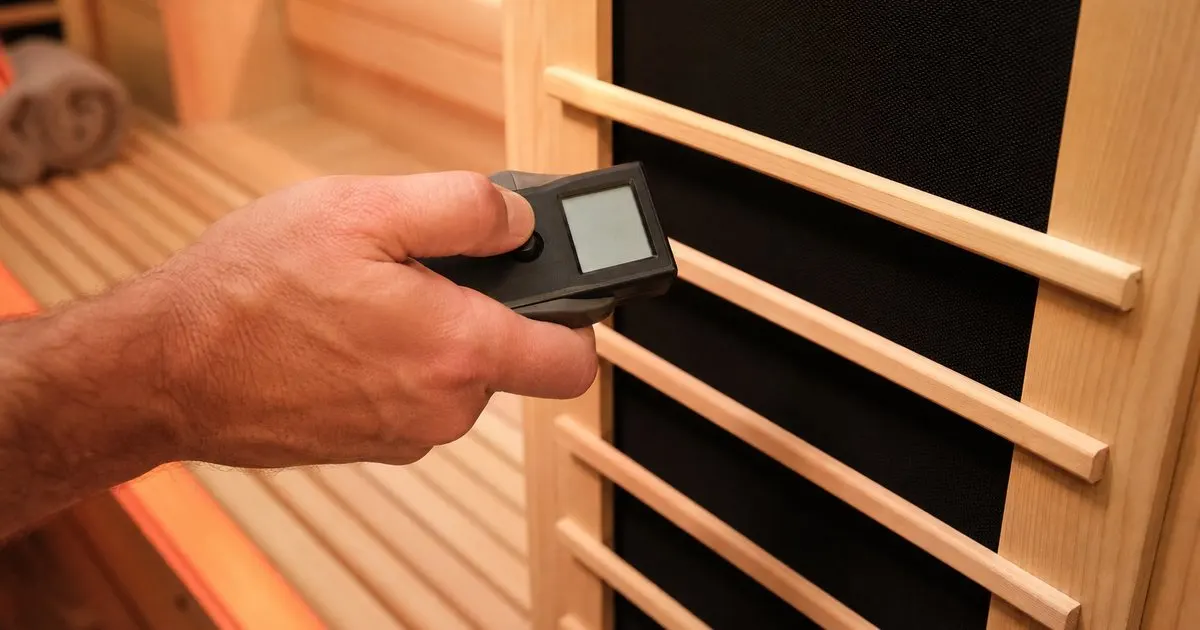
What EMF means in the context of an infrared cabin
Infrared heaters are electrical resistance devices, and any conductor carrying alternating current produces two things: an electric field, measured in volts per meter, and a magnetic field, measured in milligauss or microtesla. These are extremely low frequency fields, the same category produced by household wiring, appliances, and the power lines outside. They are not radio frequency, and they have nothing to do with the infrared light itself, which is simply heat radiation at a wavelength your skin absorbs. Related: How much space and electrical capacity does a luxury home sauna really require?
Because bathers sit within inches of the heaters for half an hour at a time, the question is reasonable even if the science on health effects at these levels is unsettled. Public health bodies publish exposure guidelines for extremely low frequency fields, and well designed cabins sit far below them. The marketing problem is that the phrase low EMF has no agreed definition, so a seller can print it on any product without a number attached.
Keep reading: How do infrared and traditional cabin saunas actually differ for a home installation?, What should you look for in the wood used to build a home sauna?, Which room in a house is best suited to installing a private sauna?. See how Saunluxe helps you the considered guide to infrared and cabin saunas for the home.
Why the measurement method matters more than the claim
Magnetic field strength falls off steeply with distance, so a reading taken an inch from a heater surface and a reading taken at the bench where your back rests can differ enormously. Sellers sometimes advertise the more flattering figure without saying which it was. The only useful number is one measured at the seated position, with all heaters running at full output, using a meter that reports magnetic and electric fields separately. Related: Are far infrared and full spectrum heaters worth the premium in a sauna?
Electric fields are the quieter half of the story. They depend on voltage rather than current, and on how the heater and its wiring are shielded and grounded. A cabin can post an impressively low magnetic reading while its electric field at the bench is comparatively high because the wiring loom runs unshielded behind a thin panel. Ask for both figures. A seller who can only provide one, or who cannot say where the probe was placed, is offering a slogan rather than a measurement.
Design features that genuinely reduce exposure
Carbon fiber panels typically run at lower current density than compact ceramic rods, and manufacturers who take EMF seriously route the supply wiring in twisted, shielded runs and ground the heater frames. Some designs place a grounded conductive layer between the heating element and the bather. These details are not visible in a showroom photo, which is why third-party test reports with the lab named and the method described are worth more than any badge on the product page.
The controller and its transformer, the lighting driver, and any audio module are also sources, and they are often mounted in the wall or ceiling near head height. A cabin marketed for its heaters alone may still have a noisy power supply a foot from your ear. A thorough report tests the cabin as a system, at the head, chest, and lower back positions, rather than heater by heater.
A practical position for a buyer
A reasonable buyer accepts fields that are documented, measured at the bench, and comparable to or lower than everyday household exposure such as sitting near a running appliance. There is no need to chase the lowest number on the market at the expense of heater quality or build, and a cabin that heats poorly is a worse purchase than one with a slightly higher but still modest reading. Related: How do you tell a well built sauna cabin from a flimsy one?
If the topic matters to you, buy an inexpensive meter and test the cabin yourself after installation. It takes ten minutes and it removes the argument entirely. Where this guide links to retailers we may earn a commission, which is one more reason we suggest verifying the figures directly rather than trusting any listing, ours included. Related: How do infrared and traditional cabin saunas actually differ for a home installation?
- Low EMF has no formal definition, so treat the phrase as a prompt to ask for numbers, not as a specification.
- Only readings taken at the seated position with all heaters running tell you anything about your exposure.
- Ask for magnetic and electric fields separately; a cabin can score well on one and poorly on the other.
- A cheap meter after installation settles the question better than any marketing badge.

Julien Jimenez
Julien Jimenez is an independent software builder based in Paris. He designs, ships, and operates focused SaaS products for small businesses and independent professionals. Read the full author page.
The Home Sauna, Chosen Well
The considered guide to infrared and cabin saunas for the home. Saunluxe is built to help you put this into practice.
Get the sauna guideMore from the Saunluxe blog
Get the complete home saunas guide
Our full buying guide, the price guide, and new research as we publish it. One email, no spam, unsubscribe any time.