How do infrared and traditional cabin saunas actually differ for a home installation?
The two styles deliver heat in fundamentally different ways, which changes the experience, the install, and the running cost.
They differ mainly in how they deliver heat. A traditional cabin heats the air with a stove for intense, steamy sessions, while infrared warms your body directly at cooler air temperatures for gentler, longer ones. Infrared is usually simpler to install, and traditional stoves need more electrical capacity.
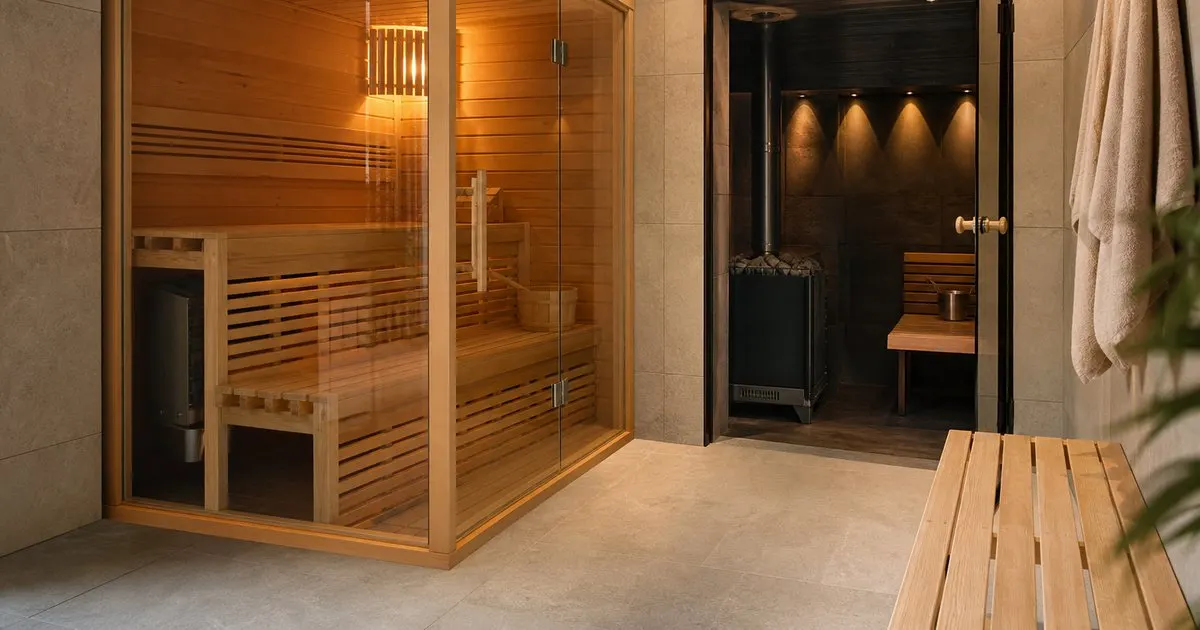
How each one heats you
A traditional sauna heats the air, often to high temperatures, using an electric or wood stove topped with stones. Your body warms because the surrounding air is hot, and you can add water to the stones for a burst of steam that raises the perceived intensity. Related: What should you look for in the wood used to build a home sauna?
An infrared sauna warms your body directly with radiant panels while keeping the air cooler. Because you feel warmth without superheating the room, sessions tend to be gentler and longer, which many people find more comfortable to sit through and easier to build into an evening. Related: Which room in a house is best suited to installing a private sauna?
Keep reading: What should you look for in the wood used to build a home sauna?, Which room in a house is best suited to installing a private sauna?, How much space and electrical capacity does a luxury home sauna really require?. See how Saunluxe helps you the considered guide to infrared and cabin saunas for the home.
What that means for your home
Infrared cabins usually run on a standard or single dedicated circuit and reach usable warmth quickly, which suits apartments and rooms where a heavy electrical upgrade is impractical. They are typically lighter and simpler to place inside a home.
Traditional electric stoves generally need a higher-capacity dedicated line, and wood-fired options require a flue and outdoor placement. The reward is a hotter, more classic sauna with the option of steam, at the cost of more involved installation and warm-up time. Related: How much space and electrical capacity does a luxury home sauna really require?
The experience, side by side
If you love intense, enveloping heat and the ritual of ladling water onto stones, a traditional sauna is hard to replace. It is a sensory experience as much as a wellness one, and for many purists nothing else feels like the real thing.
If you prefer a milder, more meditative warmth that is easy to sustain and quick to start, infrared often wins. It also tends to be more forgiving for those who find very high air temperatures uncomfortable, without giving up the sense of a proper sauna session. Related: Are far infrared and full spectrum heaters worth the premium in a sauna?
Choosing for the long term
Think about who will use the sauna and how often. A household that wants short, frequent sessions may favor infrared for its speed and simplicity, while one that treats the sauna as a weekend ritual may prefer the depth of a traditional cabin.
Whichever you choose, the quality of the cabin, heater, and ventilation matters more than the category label. A well-built infrared cabin will outperform a poorly made traditional one, so judge each candidate on construction and heat delivery rather than style alone.
- Traditional saunas heat the air hot, infrared warms your body directly at lower temperatures.
- Infrared is usually simpler to install and quicker to start, favoring apartments and busy routines.
- Traditional stoves need more power and offer intense heat plus steam.
- Build quality and ventilation matter more than the style label itself.

Julien Jimenez
Julien Jimenez is an independent software builder based in Paris. He designs, ships, and operates focused SaaS products for small businesses and independent professionals. Read the full author page.
Frequently asked questions
Which type is easier to fit in an apartment?
Infrared is generally easier, since many cabins run on a standard or single dedicated circuit and need no flue. Always confirm the exact electrical requirement for the model against your available circuits before buying.
Can you get steam in an infrared sauna?
Not in the traditional sense, because infrared warms the body rather than heating stones. If the ritual of ladling water for steam matters to you, a traditional stove-based cabin is the better fit.
The Home Sauna, Chosen Well
The considered guide to infrared and cabin saunas for the home. Saunluxe is built to help you put this into practice.
Get the sauna guideMore from the Saunluxe blog
Get the complete home saunas guide
Our full buying guide, the price guide, and new research as we publish it. One email, no spam, unsubscribe any time.