Which room in a house is best suited to installing a private sauna?
Placement affects comfort, running cost, and how often you use it. A few practical constraints narrow the field quickly.
The best room combines suitable electrical access with tolerance for warmth and a little moisture, plus a spot you will genuinely use. Bathrooms, primary suites, basements, and dedicated wellness rooms are natural fits, ideally near a shower or cool-down area, with room for the cabin to ventilate and dry.
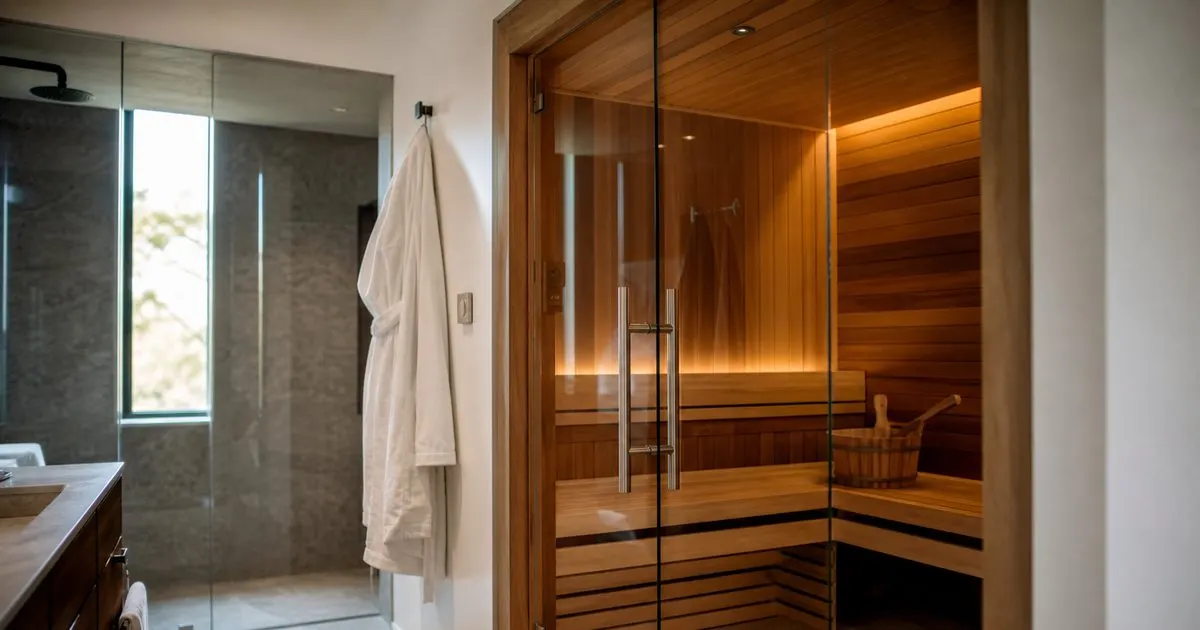
Start with power and moisture
The two hard constraints are electrical access and moisture management. A room near a suitable circuit avoids costly wiring runs, and one that tolerates warmth and the occasional bit of humidity avoids problems with finishes and adjacent materials.
Bathrooms, primary suites, basements, and dedicated wellness rooms tend to work well because they usually satisfy both. A converted closet or an alcove can also succeed if the ventilation and electrical supply are handled properly rather than improvised.
Keep reading: How do infrared and traditional cabin saunas actually differ for a home installation?, What should you look for in the wood used to build a home sauna?, How much space and electrical capacity does a luxury home sauna really require?. See how Saunluxe helps you the considered guide to infrared and cabin saunas for the home.
Comfort and the daily habit
The best location is one you will actually walk to. A sauna tucked near where you unwind, close to a shower or a place to cool down, becomes part of an evening routine, while one relegated to an awkward far corner tends to go unused. Related: What ongoing care and maintenance does a fine home sauna genuinely need?
Consider the transition around the sauna as much as the cabin itself. A spot with room to sit, cool off, and step into a rinse turns the sauna from a single appliance into a small ritual that you look forward to keeping. Related: How do infrared and traditional cabin saunas actually differ for a home installation?
Ventilation and surroundings
A sauna needs to breathe and to dry out after use, so a room with a path for fresh air and some tolerance for warmth is ideal. Avoid sealing the cabin into a cramped, airless space where moisture has nowhere to go.
Be mindful of neighboring materials and finishes. Heat-sensitive surfaces, delicate wallpaper, or unsealed cabinetry immediately beside the cabin can suffer over time, so a little clearance and sensible surroundings protect both the sauna and the room.
Indoors or a garden room
Indoor placement is the most convenient and keeps the sauna usable year-round without weatherproofing. It suits infrared and electric cabins especially well, since they integrate cleanly into a bathroom, basement, or wellness space. Related: Are far infrared and full spectrum heaters worth the premium in a sauna?
If indoor space is tight, a garden room or outbuilding can host a sauna beautifully, particularly a traditional stove-based one. It asks for weatherproofing and a proper power supply, but rewards you with a retreat that feels separate from the house. Related: How much space and electrical capacity does a luxury home sauna really require?
- Prioritize rooms with suitable power and tolerance for warmth and moisture.
- Bathrooms, primary suites, basements, and wellness rooms are natural fits.
- Place it where you will actually use it, near a shower or cool-down spot.
- Ensure ventilation and keep heat-sensitive finishes at a sensible distance.

Julien Jimenez
Julien Jimenez is an independent software builder based in Paris. He designs, ships, and operates focused SaaS products for small businesses and independent professionals. Read the full author page.
Frequently asked questions
Can I put a sauna in a small bathroom?
Often yes, if there is space for the cabin, a suitable circuit, and a path for ventilation. Compact infrared and electric cabins are designed with such rooms in mind, but confirm clearances and power before committing.
Is a basement a good place for a sauna?
Basements can be excellent, offering stable temperatures and room to spare. Just confirm the electrical supply, provide ventilation, and manage moisture so the cabin can dry properly between uses.
The Home Sauna, Chosen Well
The considered guide to infrared and cabin saunas for the home. Saunluxe is built to help you put this into practice.
Get the sauna guideMore from the Saunluxe blog
Get the complete home saunas guide
Our full buying guide, the price guide, and new research as we publish it. One email, no spam, unsubscribe any time.