Why does a home sauna room need dedicated ventilation and moisture control?
The cabin itself is only half the installation. The room around it decides whether the wood, the walls, and the air stay healthy for a decade.
What actually happens to the air during a session
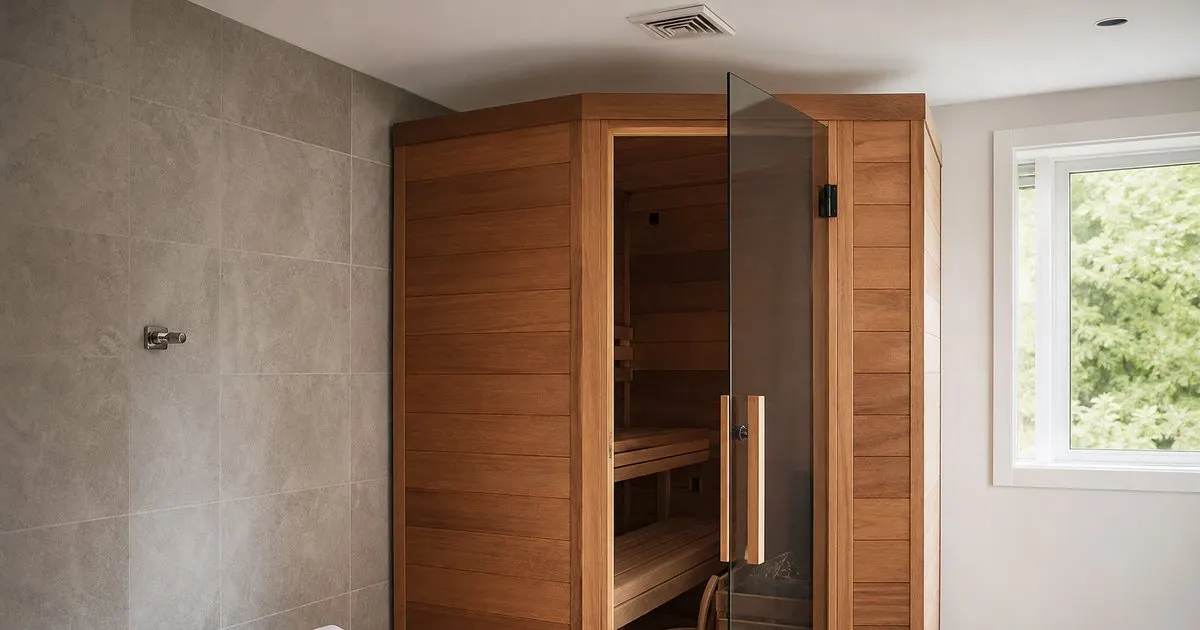
Every session releases heat, water vapor from sweat and breath, and volatile compounds from warm wood into the surrounding room. A traditional cabin with water on the stones adds bursts of steam on top of that. Inside the cabin, most quality designs include a low inlet and a high outlet so that air moves through the space, but that air has to go somewhere, and where it goes is the room you placed the cabin in.
In a large, well ventilated living space the effect is negligible. In a small bathroom, a closet conversion, or a basement corner, the same session can push humidity up noticeably and leave warm, moist air pressed against cool exterior walls and windows. That is the condition under which condensation forms behind trim, inside wall cavities, and on the back face of the cabin where nobody looks.
Keep reading: How do infrared and traditional cabin saunas actually differ for a home installation?, What should you look for in the wood used to build a home sauna?, Which room in a house is best suited to installing a private sauna?. See how Saunluxe helps you the considered guide to infrared and cabin saunas for the home.
Ventilation inside the cabin versus ventilation of the room
Cabin vents exist for comfort and fresh air, not for drying the room. They ensure oxygen reaches the bathers and that heat distributes rather than stratifying at the ceiling. Adjustable sliding vents are typical on prefabricated cabins, and they should be open at least partially during every session. Blocking them to hold heat is a common owner mistake that makes the air stale and, in a traditional sauna, makes the heater work harder against a dead pocket of air. Related: Are far infrared and full spectrum heaters worth the premium in a sauna?
Room ventilation is a separate system. For an indoor installation the practical minimum is an exhaust fan ducted outdoors, sized for the room, run during the session and for a period afterward. A bathroom style timer switch handles this well. Where the cabin sits in an open plan area, simply cracking a window in the adjacent space and leaving the cabin door open for half an hour after use accomplishes most of what a fan would.
Protecting the structure of the house
The most expensive ventilation failures are the ones that show up years later as soft drywall, peeling paint, or a musty smell that will not clear. Placing a cabin tight against an exterior wall in a cold climate is the classic setup for this, because the wall surface behind the cabin stays cool while the air in front of it is warm and humid. Leave a gap of a few inches for air to circulate, and never seal a cabin into an alcove without leaving that path.
Traditional saunas that are built in rather than prefabricated need a foil vapor barrier behind the interior paneling, with seams taped and a ventilated air gap. This is standard practice among competent sauna builders and it is not optional. Infrared cabins produce far less moisture and do not require the barrier, but the flooring beneath any cabin should be a hard, non-absorbent surface such as tile or sealed concrete rather than carpet, which will hold moisture and odor. Related: How do infrared and traditional cabin saunas actually differ for a home installation?
Managing the space day to day
A simple hygrometer in the room tells you more than guesswork. If indoor humidity climbs into the range where windows fog in winter, the room needs more air exchange or a dehumidifier during the sauna season. Basements in particular benefit from a dedicated dehumidifier because their ambient humidity is already elevated and the sauna only adds to it. Related: Which room in a house is best suited to installing a private sauna?
After each session, prop the cabin door open, leave the vents open, and let the interior cool with air moving through it. Towels on the benches should come out to dry elsewhere. These habits take seconds, cost nothing, and do more to preserve the wood and the room than any product marketed as a sauna care solution. The cabin you are buying should last a very long time, and the room around it should not pay the price. Related: What should you look for in the wood used to build a home sauna?
- Cabin vents keep bathers comfortable; room ventilation protects the house, and both are needed.
- Warm humid air against a cold exterior wall is the most common cause of hidden condensation damage.
- Built-in traditional saunas require a taped foil vapor barrier; infrared cabins do not, but still need hard flooring.
- Prop the door open after every session and use a hygrometer to know when the room needs help.

Julien Jimenez
Julien Jimenez is an independent software builder based in Paris. He designs, ships, and operates focused SaaS products for small businesses and independent professionals. Read the full author page.
The Home Sauna, Chosen Well
The considered guide to infrared and cabin saunas for the home. Saunluxe is built to help you put this into practice.
Get the sauna guideMore from the Saunluxe blog
Get the complete home saunas guide
Our full buying guide, the price guide, and new research as we publish it. One email, no spam, unsubscribe any time.