How do you choose between a two person and a four person home sauna?
Capacity labels flatter every cabin. Here is how seat counts, heater coverage, and real household habits should shape the size you buy.
What a capacity label really describes
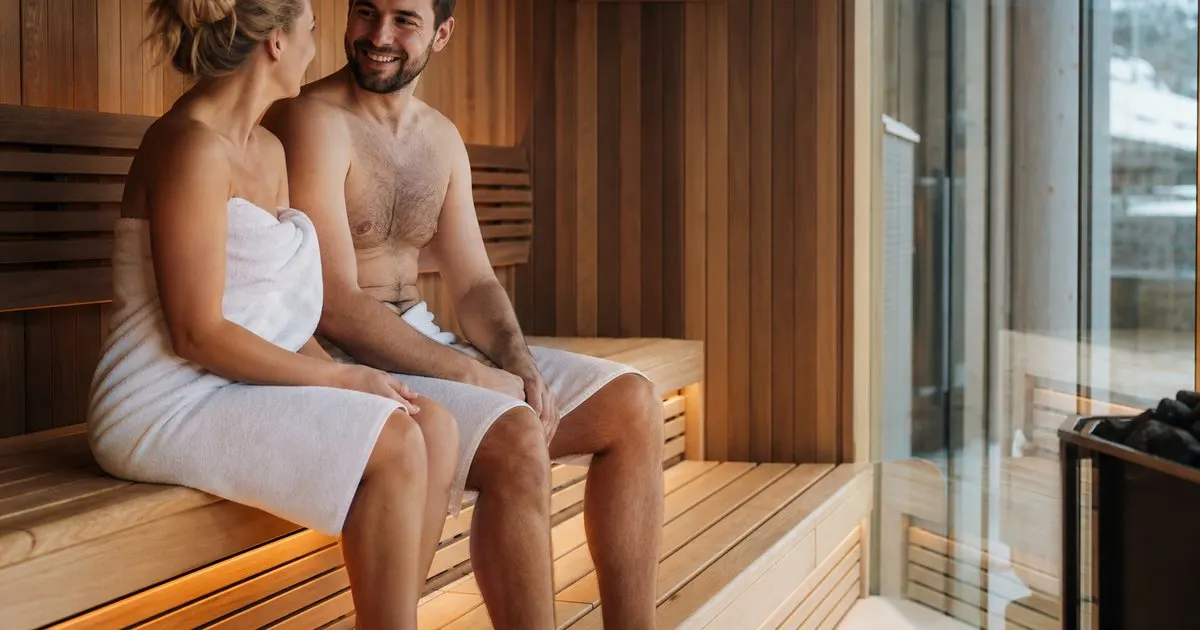
A cabin sold as a four person model will usually seat four adults shoulder to shoulder on a single bench with knees nearly touching the opposite wall. It is a maximum, not a description of comfortable use. A two person label similarly means two adults sitting upright. Neither figure says anything about lying down, stretching your legs, or the elbow room that makes a 30 minute session relaxing rather than tolerable.
A more useful way to read a listing is by interior bench length and depth, and by interior height. A bench of around 6 feet allows one person to recline fully. A depth that lets you sit back against a backrest with feet flat is more comfortable than a shallow perch, and interior height decides whether a tall bather has clearance and whether heat has room to distribute in a traditional cabin.
Keep reading: How do infrared and traditional cabin saunas actually differ for a home installation?, What should you look for in the wood used to build a home sauna?, Which room in a house is best suited to installing a private sauna?. See how Saunluxe helps you the considered guide to infrared and cabin saunas for the home.
Heater coverage changes with size
In an infrared cabin, warmth comes from being close to the panels, and every seat needs its own coverage behind, beside, and ideally in front at calf height. Larger cabins do not automatically scale heater count with floor area, so a four person model may have more unheated wall per bather than a two person one. Study the heater layout drawing rather than the total wattage, and ask specifically whether the corner seats and the seats facing the door are heated. Related: Are far infrared and full spectrum heaters worth the premium in a sauna?
A traditional cabin scales differently. The heater is sized to room volume, warm-up time grows with that volume, and a larger room takes longer and costs more to heat but is more forgiving of where you sit. If you want the option of lying down in a traditional sauna, the room should be planned around an upper bench of full body length, which is a different design from a compact two person box. Related: How do infrared and traditional cabin saunas actually differ for a home installation?
How households actually use a sauna
Most owners find that the great majority of sessions are taken alone or as a couple, with the full capacity used only when guests visit. That argues for buying the size that suits daily life and accepting a slightly crowded cabin a few times a year. A two person cabin that one person can recline in is often used more than a four person cabin bought for entertaining that stands empty because it takes longer to warm and feels cavernous alone. Related: How much space and electrical capacity does a luxury home sauna really require?
The exception is families with teenagers or households where two or three adults keep different schedules and might all want a session at once. In that case the larger cabin is used at capacity regularly and the decision is easy. Consider also whether a corner model, which uses space efficiently and can seat three comfortably, fits the room better than a rectangular four person unit. Related: Which room in a house is best suited to installing a private sauna?
The practical constraints that settle it
Footprint, door swing, and ceiling height are often the deciding factors regardless of preference. Measure the room, subtract clearance for ventilation behind and beside the cabin, and check that the door opens fully and that you can walk past it. Larger cabins, particularly at four person sizes and above, are more likely to need a dedicated circuit and take longer to assemble.
Price rises with size less steeply than you might expect, which tempts buyers to go larger. Resist that logic if the extra space will rarely be used. The best cabin is the one whose size makes you want to step in tonight, and for most people that is the more intimate, faster warming option with a bench long enough to lie on.
- Capacity labels describe a maximum upright seating count, not comfortable use.
- In infrared cabins, judge heater layout per seat rather than total wattage, because larger models can leave seats cold.
- Most sessions are taken solo or as a couple, so size for daily habit and tolerate occasional crowding.
- Footprint, door swing, ceiling height, and circuit requirements often decide the question for you.

Julien Jimenez
Julien Jimenez is an independent software builder based in Paris. He designs, ships, and operates focused SaaS products for small businesses and independent professionals. Read the full author page.
The Home Sauna, Chosen Well
The considered guide to infrared and cabin saunas for the home. Saunluxe is built to help you put this into practice.
Get the sauna guideMore from the Saunluxe blog
Get the complete home saunas guide
Our full buying guide, the price guide, and new research as we publish it. One email, no spam, unsubscribe any time.