Which makes more sense for a home sauna, a custom built room or a prefabricated cabin?
A modular cabin arrives engineered and warranted as a single product. A built-in room bends to your house but spreads responsibility across trades. Here is how the two paths genuinely differ.
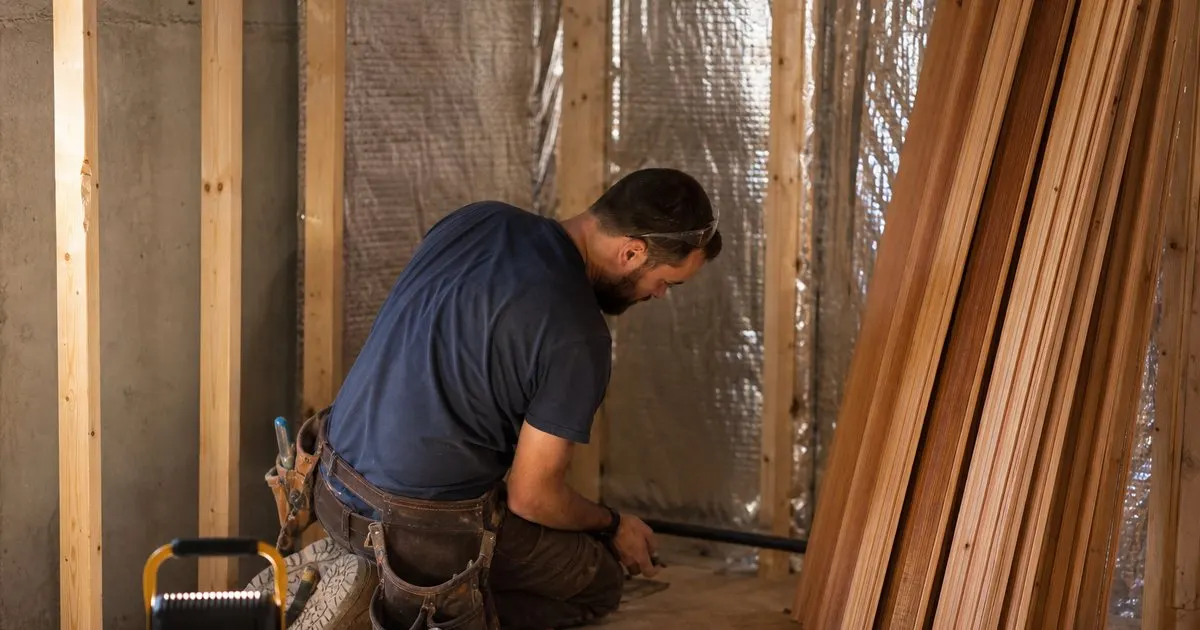
The choice is not simply kit versus carpentry
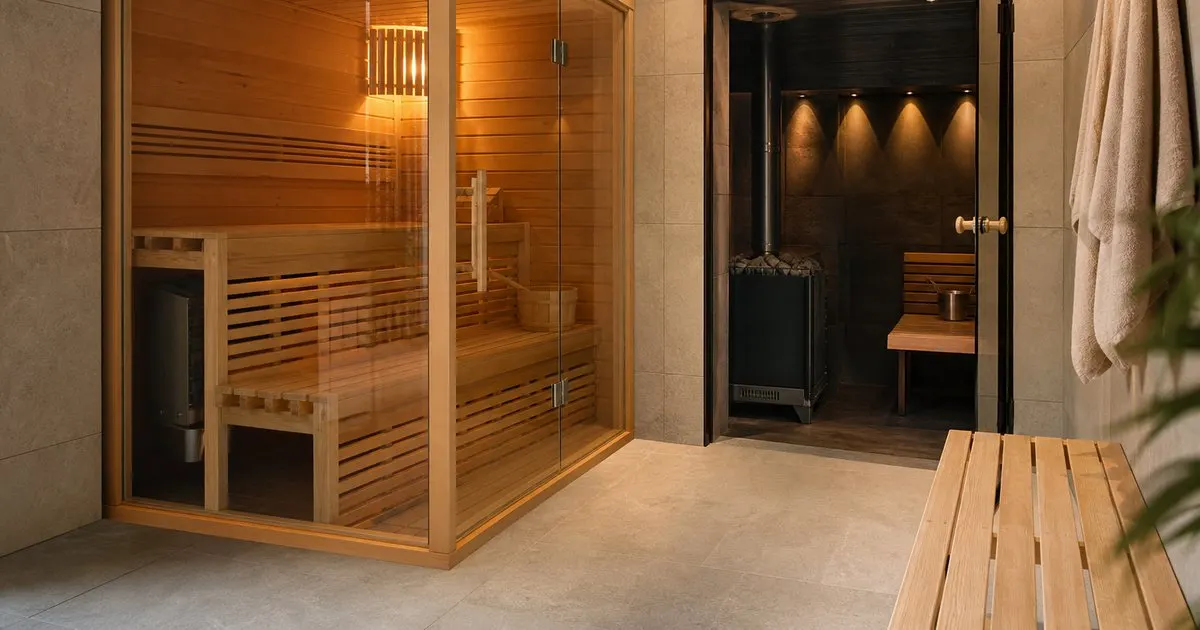
A prefabricated cabin arrives as a set of finished wall panels, a bench assembly, a glass front and a heater already matched to the cabin volume. The panels lock together with cam latches or a tongue and cleat system, the wiring terminates at a single connection point, and the finished cabin sits inside your room as a freestanding object. Nothing about it becomes structurally part of the house. Two people can usually assemble one in a day and, in principle, take it apart again the same way. Related: Which room in a house is best suited to installing a private sauna?
A custom sauna is a room rather than an object. Studs are framed against the existing walls, a foil vapor barrier is stapled continuously across the cavity, mineral wool or a comparable insulation fills the bays, and tongue and groove cladding is fitted board by board over furring strips. The heater is specified separately against the finished cubic volume, bench frames are built in place, and the door hangs in a real jamb. When it is done, the sauna meets the floor and ceiling like any other room in the building. Related: Are far infrared and full spectrum heaters worth the premium in a sauna?
Keep reading: How do infrared and traditional cabin saunas actually differ for a home installation?, What should you look for in the wood used to build a home sauna?, Which room in a house is best suited to installing a private sauna?. See how Saunluxe helps you the considered guide to infrared and cabin saunas for the home.
Where the money actually goes on each side
With a prefab cabin, most of what you pay is embedded in the product itself: the grade and thickness of the timber, the heater technology, the glazing, the control electronics, and the engineering that lets a panelised box hold heat without leaking at every seam. Delivery and a few hours of assembly labor are usually the only costs incurred on site, assuming an electrician is already running the circuit. Moving up through a five to fifteen thousand dollar budget typically buys better wood, better emitters and better glass rather than more square footage.
A custom room reverses that ratio. The materials for a small room, meaning insulation, vapor barrier, cladding, bench stock and a heater, often total a fraction of a comparable prefab cabin, but labor, design time and coordination between trades carry the real cost. Framing, electrical, occasionally plumbing for a floor drain, and finish carpentry each arrive as separate line items on separate schedules. Quotes hinge heavily on the carpenter's familiarity with sauna assemblies, because a joiner who has never detailed a vapor barrier in a hot room will either price defensively or make expensive mistakes. Related: How do infrared and traditional cabin saunas actually differ for a home installation?
Rooms that only one of the two options can serve
Custom construction earns its premium when the space refuses to cooperate. Sloped basement ceilings, a chimney breast intruding into a corner, a soffit carrying ductwork at head height, an alcove three inches narrower than every catalog footprint: these are the conditions where a prefab cabin either does not fit at all or fits so badly that you lose a bench. Building on site also lets you put the door where the traffic pattern wants it, set bench heights to the people who will actually use them, and run the upper bench full length instead of accepting a standard compromise. Related: How do you tell a well built sauna cabin from a flimsy one?
A prefab cabin repays you in certainty instead. Its volume, heater output and insulation were designed together and tested as one unit, so the cabin reaches temperature on schedule and holds it without drama. In a custom room the same result depends on your installer sealing the vapor barrier properly, sizing the heater to the finished cubic feet rather than a guess, and keeping the ceiling low enough that you are not heating dead air above the bench. Those problems are all solvable, but they become yours to solve rather than the manufacturer's.
Warranty, service and the day you eventually move
A modular cabin gives you one company to call. Cladding, heater, controller and glass sit under a single document with a single claims process, and heaters are generally stocked as replaceable modules for the commercial life of the model. On a custom build the heater carries its own manufacturer warranty, the carpentry carries a builder's workmanship guarantee, and the electrical work sits with the electrician. If the finished room underperforms, no single party owns the problem, which is exactly why a written scope defining responsibility matters more on a bespoke job than on a purchase.
The relocation question deserves a decision before you commit rather than after. A panelised cabin can be dismantled, moved and rebuilt, though seals and fasteners rarely survive the process perfectly and a specialist crew is worth paying for. A built-in room stays with the house permanently. Neither answer is wrong, but a household expecting to move within a few years usually gets more back from a cabin it can take along, while an owner settling in for a decade tends to prefer a room that reads as architecture rather than as furniture.
- A prefab cabin is a freestanding product; a custom sauna is a room framed, insulated and clad as part of the house.
- Prefab budgets buy better wood, heaters and glass, while custom budgets are dominated by skilled labor and trade coordination.
- Sloped ceilings, intruding structure and non standard footprints are the strongest arguments for building on site.
- A modular cabin keeps warranty and relocation simple; a built-in room concentrates the value in the property instead.

Julien Jimenez
Julien Jimenez is an independent software builder based in Paris. He designs, ships, and operates focused SaaS products for small businesses and independent professionals. Read the full author page.
The Home Sauna, Chosen Well
The considered guide to infrared and cabin saunas for the home. Saunluxe is built to help you put this into practice.
Get the sauna guideMore from the Saunluxe blog
Get the complete home saunas guide
Our full buying guide, the price guide, and new research as we publish it. One email, no spam, unsubscribe any time.